
Issue 19: Claude Makes Waves, Apple Powers Siri With Gemini
The privacy vs. convenience trade-off looms larger than ever.
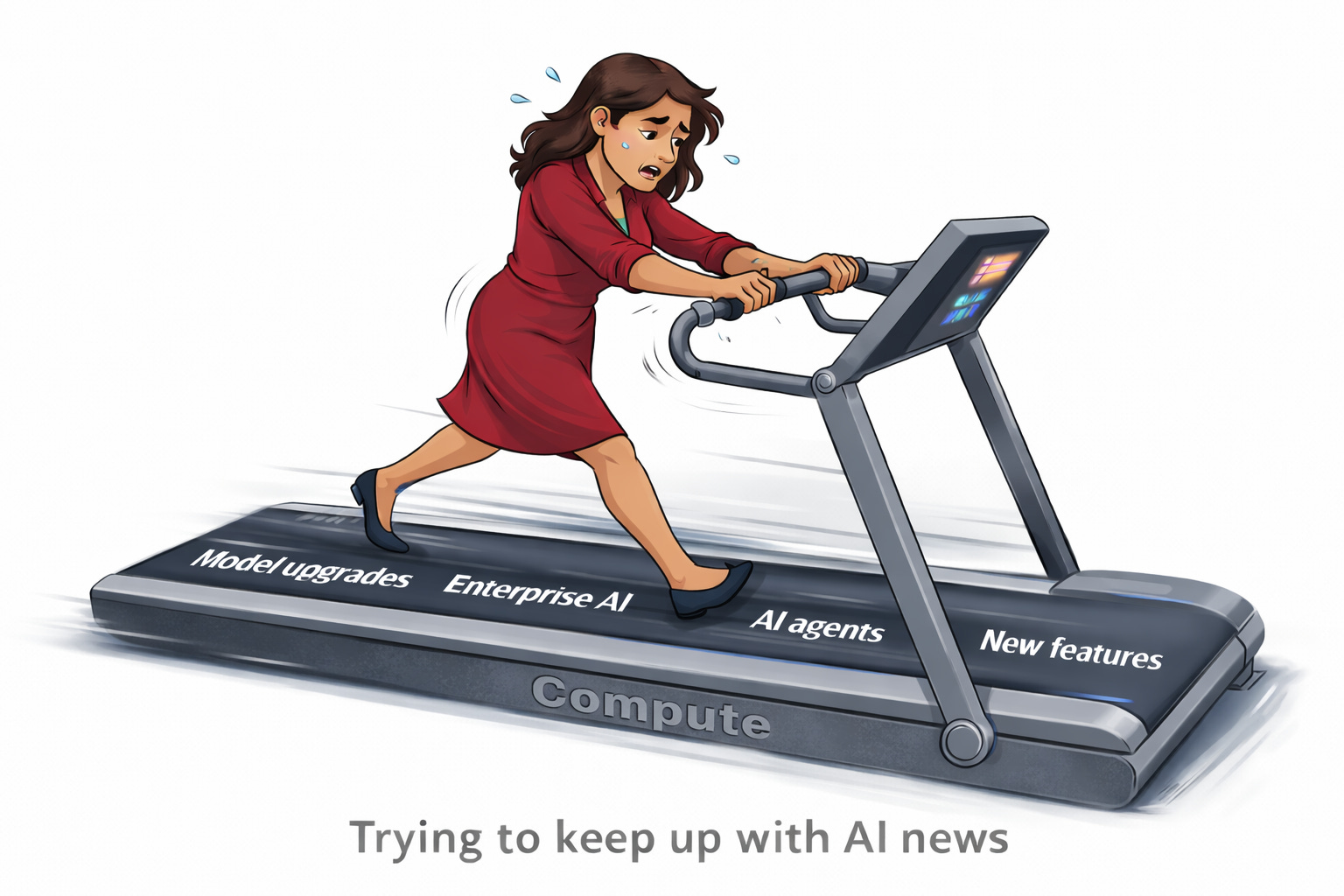
The pace of AI announcements over the last month has been unusually intense. Product launches, feature drops, partnerships, and strategic pivots have landed in quick succession across enterprise and consumer AI. This special issue focuses on the most relevant of these developments. We’ll return to our regular news–trends–how-to format in the next edition.
Enterprise AI Moves Inside the Workflow
Anthropic’s Claude Cowork takes AI inside your workflow, not beside it
Claude Cowork (currently macOS only) is a visual workspace where Claude can open files, edit documents, run code, and carry out multi-step tasks. The underlying model isn’t new. Cowork is essentially a more user-friendly layer built on top of Anthropic’s Claude Code, making it possible for non-technical users to have Claude work directly inside their files and execute multi-step tasks. Instead of prompting in one window and manually moving outputs between tools, Claude Cowork works inside those files.
The downsides? Cost and data access. It requires at least the Pro plan, and quickly eats up your usage allocation unless you have the expensive Max plan. It also needs deeper, more persistent access to your files than chat-based tools, which may be a concern in many work environments.
Gmail gets a Gemini-powered inbox for Google Workspace users
Google is rolling out deeper Gemini integration in Gmail Google Workspace accounts, adding GenAI-driven inbox prioritization, thread summaries, and context-aware draft replies. Google frames this as a shift from a passive inbox to a more proactive assistant that understands context from conversations, rather than relying mainly on rules or labels. However, Gemini can only suggest summaries and replies but does not send emails or act on your behalf.
The features are opt-in and controlled by Workspace admins, allowing companies to enable or restrict them. For now, this is a Workspace-only update for business users, not consumer Gmail accounts. Google says it does not use Gmail data to train its core AI models, though privacy concerns remain given the level of inbox access required.
Sometimes, Staying Competitive Means Partnering With a Rival
Apple picks Gemini to power the next Siri
After months of speculation, Apple confirmed a multi-year partnership with Google to use Gemini models as the foundation for its next-generation Siri and upcoming Apple Intelligence features. Apple will still run these models on its own devices and private cloud, but it’s a clear signal that in-house AI alone wasn’t enough to move fast.
For Google, this is a major distribution win. Gemini gets embedded into one of the largest consumer ecosystems in the world. For users, it likely means more capable AI features inside Apple products sooner than expected. More broadly, it points to a growing willingness among even highly integrated companies to rely on partnerships to stay competitive in AI.
Will End-users Give Up More Than They Get?
Gemini gets more personal, with real trade-offs
This one’s a biggie if you are sensitive to the convenience vs. privacy tradeoff. Google is repositioning Gemini around what it calls “Personal Intelligence”. Instead of treating each chat in isolation, Gemini can use context from connected Google apps like Gmail, Calendar, and Docs across queries. The feature is live in beta for users on paid Google AI Pro or AI Ultra plans in the US. It’s opt-in and off by default, requiring users to explicitly connect apps.
In practice, this can mean pulling relevant emails, using calendar context, or continuing work in Docs without repeated instructions. However, by opting in users allow Google to draw more deeply on their existing data. The value is convenience and continuity. The cost is more personal data exposure.
Do ads signal the start of ChatGPT’s eventual enshittification?
OpenAI confirmed that advertising will become part of ChatGPT’s future as a way to expand access and sustain scale. This is significant because it cements ChatGPT’s evolution from a product into a consumer platform, closer to search or social media than enterprise SaaS.
OpenAI says ads won’t roll out immediately and won’t influence model training or responses. Still, the direction is clear. Once ads exist, ChatGPT stops being just a tool and becomes a place where attention is monetized.
For users, this raises questions about neutrality and influence. For developers, it signals that distribution and visibility may matter as much as model quality. And for businesses, it hints that AI interfaces themselves could soon become paid real estate.
For some of us, the reaction is simpler: groan.
Agentic Commerce is Here and Real
OpenAI is building more native shopping tools into ChatGPT
OpenAI is testing new shopping capabilities inside ChatGPT including a built-in shopping cart and tools for merchants to upload product listings. This builds on Instant Checkout, which OpenAI already launched in the US, allowing users to complete single-item purchases directly in ChatGPT.
The new cart layer allows users to discover products, save them, compare options, and purchase multiple items without leaving the chat interface. While the features are still being tested, they show OpenAI laying the groundwork for first-party, AI-native shopping inside ChatGPT.
Google is adding in-chat checkout to Gemini through major retailers
Google announced shopping features for Gemini that enable in-chat checkout through partners like Walmart, Wayfair, and Shopify. In the US, users can link their existing retailer accounts and complete purchases without leaving Gemini. Overall, this puts Gemini on similar footing to what ChatGPT already supports with Instant Checkout.
Together, these moves point to a clear trend: AI assistants are evolving from “help me decide” tools into places where decisions actually turn into purchases.
That brings us to the end of our State-Of-The-Union-esque issue. If you enjoyed it, like, subscribe, and share with others.
Cheers!